- March 28, 2024
- Capitree Asset LLP
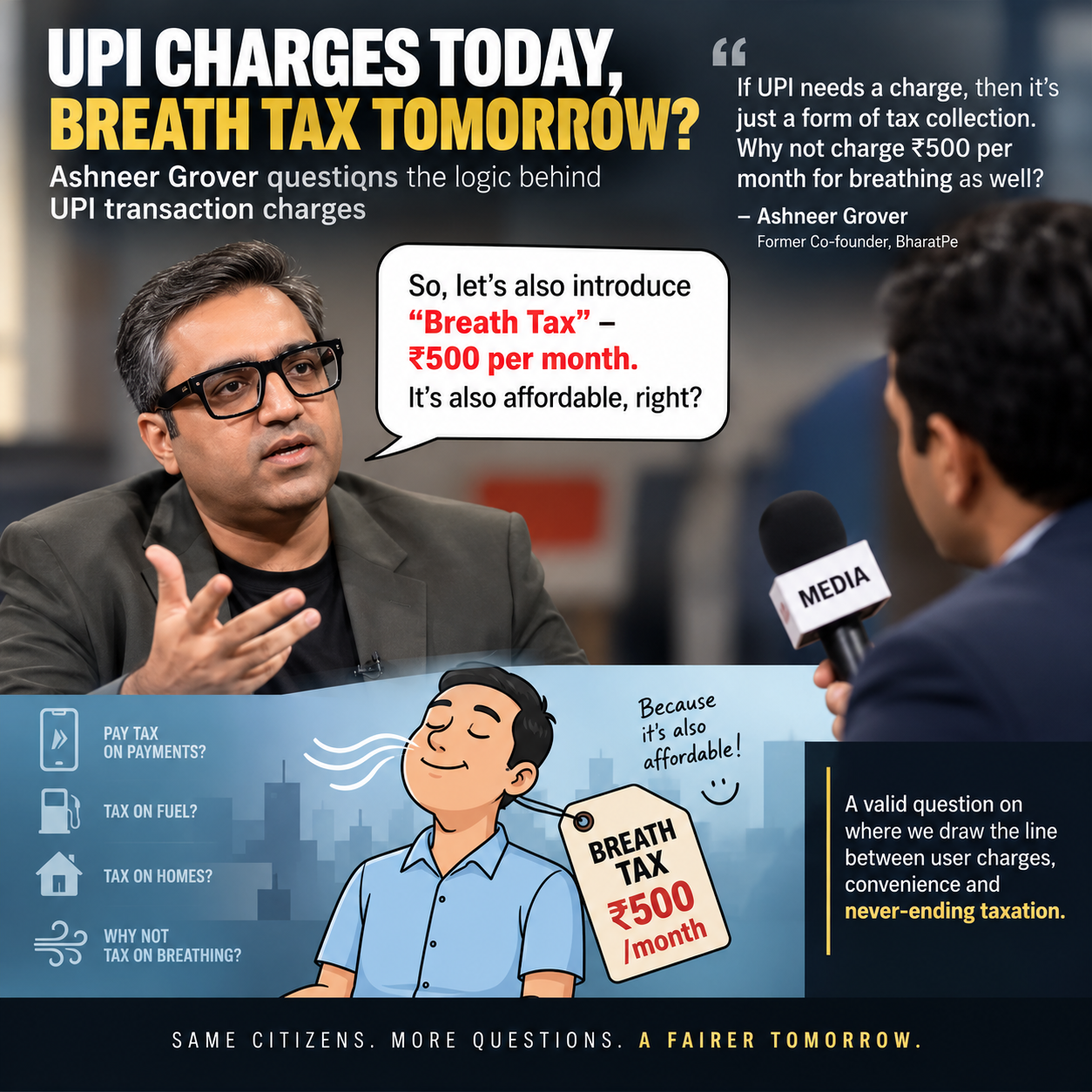
₹500 for Breathing? Ashneer Grover’s || Government announced UPI MDR 0.4%
₹500 for Breathing? Ashneer Grover’s UPI Analogy Raises an Interesting Finance Question “Why not charge ₹500 a month for breathing? It’s affordable, right?” That was Ashneer Grover’s analogy while questioning the rationale behind the newly announced UPI Merchant Discount Rate (MDR). From 15 October 2026, a 0.4% MDR will apply to specified UPI merchant transactions above ₹2,000, with a ₹300 cap. The government says this is not a tax, will be borne within the merchant payment ecosystem, and that around 96% of P2M transactions will remain unaffected. But Grover’s analogy points towards a broader finance question: When an essential digital infrastructure becomes deeply embedded in everyday economic activity, where should the cost of maintaining that infrastructure sit? From a finance professional’s perspective, the debate isn’t simply about whether 0.4% is affordable. It is about: Cost → Incidence → Margins → Pricing → Consumer impact A merchant may technically bear the MDR. But if the cost affects merchant margins, competitive pricing or operating economics, the eventual economic incidence can become a larger question. At the same time, UPI infrastructure isn’t costless. Banks, payment platforms, cybersecurity, technology and transaction processing require continuous investment. The government argues that MDR is intended to support the long-term sustainability of this ecosystem. So perhaps the real question isn’t: “Can we afford the charge?” It is: “What is the economically justified cost of using a public digital payment infrastructure—and who should bear it?” That’s a much more interesting finance debate than simply calling UPI “free” or “paid.” Aakash Bisht, Strategic Consultant #UPI #MDR #Fintech #DigitalPayments #Finance #BusinessFinance #FinancialAnalysis #NPCI #Payments #India
- March 28, 2024
- Capitree Asset LLP
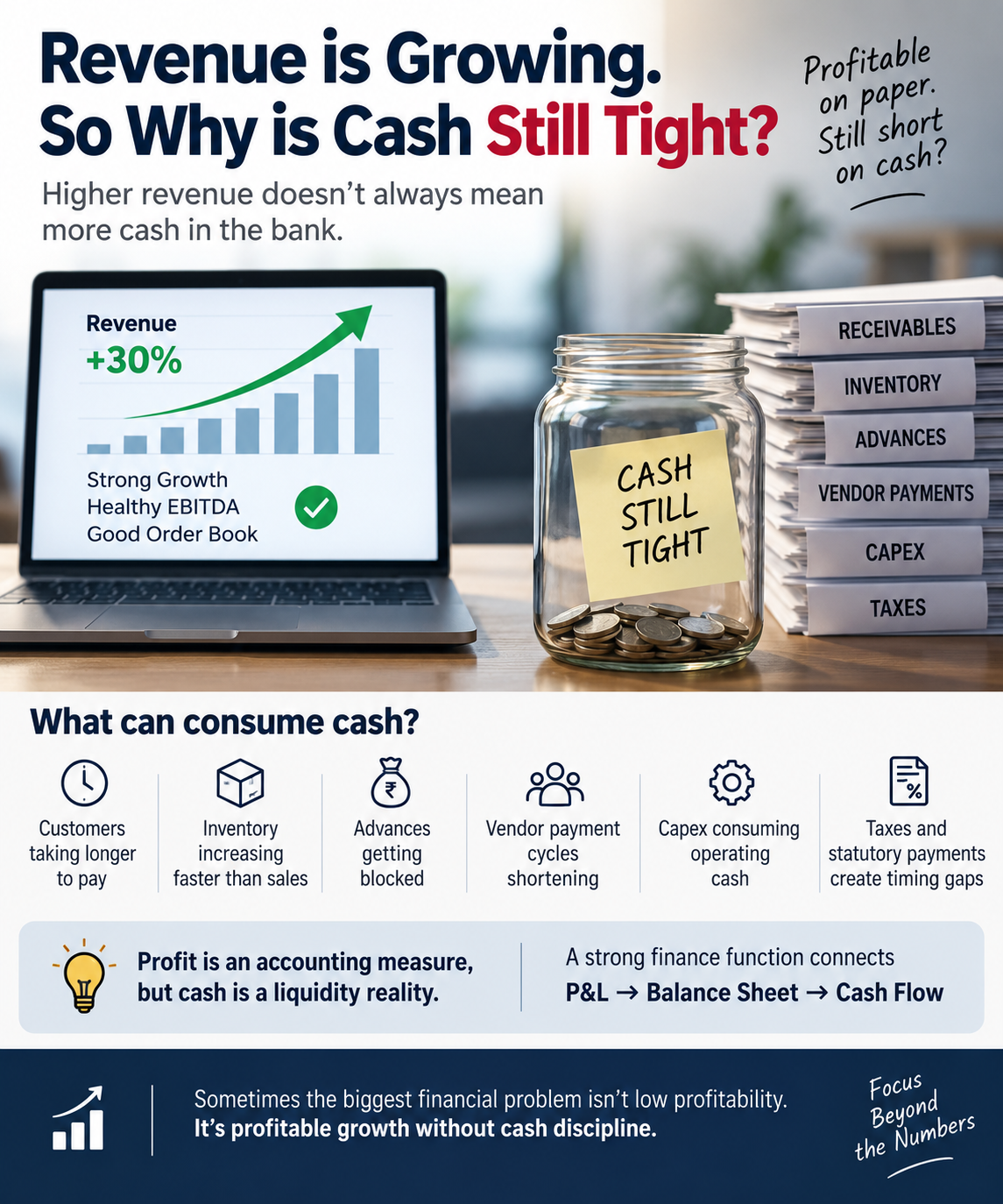
Revenue is growing. So why is cash still tight?
Revenue is growing, but Cash isn’t ! One of the most common mistakes in business is assuming: Higher Revenue = More Cash Not necessarily. A company can report: 📈 30% growth in revenue 📈 Healthy EBITDA 📈 Strong order book …and still struggle to pay its vendors or meet monthly obligations. Why? Because profit is an accounting measure, while cash is a liquidity reality. A few things can consume cash even when the P&L looks healthy: • Customers are taking longer to pay • Inventory is increasing faster than sales • Advances are getting blocked • Vendor payment cycles are shortening • Capex is consuming operating cash • Taxes and statutory payments create timing gaps This is where finance needs to go beyond: “How much did we earn?” and start asking: “Where is the cash stuck?” A strong finance function should connect: P&L → Balance Sheet → Cash Flow Because sometimes the biggest financial problem isn’t low profitability. It’s profitable growth without cash discipline. Aakash Bisht, Strategic Consultant #Finance #FPandA #BusinessFinance #CashFlow #WorkingCapital #FinancialManagement #FinanceProfessionals